Weather Adaptation Lab
About
Our research group at Ontario Tech University explores how weather and environmental conditions impact vehicles, buildings, and aerodynamic systems. Led by Prof. Horia Hangan, Canada Research Chair in Adaptive Aerodynamics, the team combines experimental and computational methods to study wind, precipitation, and heat transfer effects. Through projects like Weather on Wheels and Weather in Box, we aim to improve autonomous vehicle safety and develop energy-efficient building solutions for challenging climates.
Research
-
Weather on Wheels
Weather on Wheel
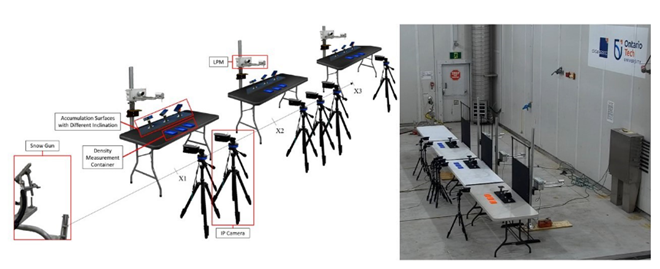
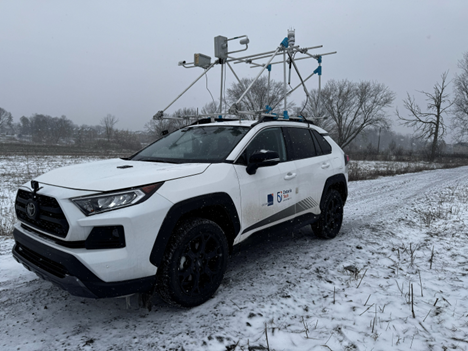 The Weather on Wheels (WoW) project investigates how adverse weather conditions such as snow, rain, and wind affect autonomous vehicle sensor performnce and environmental perception. The project combines controlled experiments in the ACE Climatic Chamber with real-world tests at the Windfields Farm site to study the interaction of precipitation and aerodynamic flow around moving vehicles. It focuses on quantifying snow and rain particle characteristics, visibility reduction, and accumulation effects on various sensors—such as LiDAR, cameras, and meteorological instruments (WXT, LPM). The findings aim to enhance sensor robustness, develop improved perception algorithms, and contribute to safer autonomous vehicle operation in extreme weather environments.
 -
Weather In Box
Weather In a Box
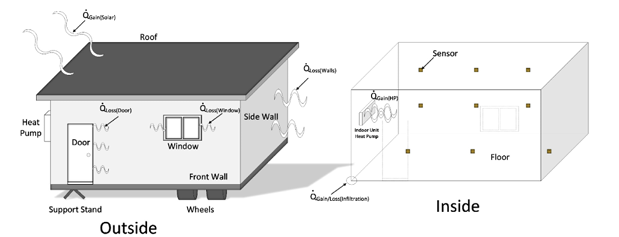
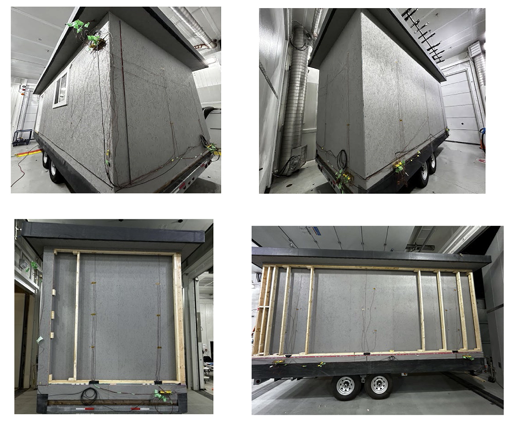 The Weather in Box (WiB) project focuses on studying the thermal performance of a full-scale, highly instrumented test room designed with controlled insulation layers and a green roof system. The setup enables detailed investigation of heat transfer mechanisms through the building envelope under various simulated and natural weather conditions. By monitoring parameters such as surface temperature, heat flux, and energy exchange between the roof and indoor environment, the project aims to evaluate the influence of green roof systems and insulation design on overall thermal efficiency and comfort. The outcomes contribute to improving energy-efficient building design strategies for cold climates.
Horia Hangan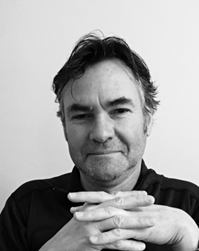
Canada Research Chair in Adaptive Aerodynamics
Professor
Department of Mechanical and Manufacturing Engineering
Faculty of Engineering and Applied Science
Dr. Horia Hangan's research is mainly in Experimental Fluid Mechanics. He has worked extensively in bluff body aerodynamics, turbulent coherent structure dynamics and aerodynamic control with applications to aero structures, buildings and vehicles. Dr. Hangan innovated the experimental simulation of three-dimensional, non-stationary and non-gaussian flows through the concept of the WindEEE Dome.
1. Mohammad Sadegh Moradi Ghareghani
PhD Candidate
Sadegh is currently pursuing his PhD in Mechanical Engineering at Ontario Tech University, where his research focuses on understanding how harsh weather—particularly snowfall—affects autonomous vehicle performance through outdoor field measurements, controlled climatic chamber experiments, and numerical simulations, with the goal of developing models that address precipitation, accumulation, and visibility challenges. He holds a bachelor’s degree in mechanical engineering from Shiraz University, where he conducted research on fluid–solid interactions in AFM systems, and a master’s degree in aerospace engineering from Amirkabir University of Technology (Tehran Polytechnic), where he proposed and simulated a new vertical-axis wind turbine using RANS-based CFD methods. Throughout his academic journey, he has also gained experience in aeroacoustics, aerodynamic optimization, and numerical simulation for propeller blade design, and he completed Stanford’s Machine Learning course, which strengthened his skills in data mining and machine learning.
2. Daryoush Dadpour
PhD Candidate
Daryoush Dadpour is a Ph.D. candidate in Mechanical Engineering (Energy Conversion) at Ontario Tech University. His doctoral research explores the seasonal energy behavior of green roofs and their influence on the overall thermal and energy performance of buildings. Through both laboratory and outdoor experimental studies, his work aims to advance sustainable and energy-efficient building technologies.
He completed his M.Sc. in Mechanical Engineering (Energy Conversion) at Birjand University, where he investigated the thermodynamic and economic performance of desalination systems operating in natural gas pressure-reduction stations.
His research interests include waste-heat recovery, multi-generation systems, CO₂ refrigeration cycles, optimization using artificial intelligence techniques, and energy-efficient building technologies.
1. Mohamed Elewah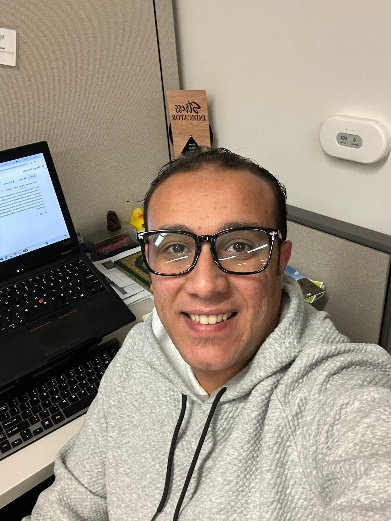
Master of Science
Mohamed Elewah is a master's student in Mechanical Engineering with a background in Automotive Engineering (BSc, MEng). He completed his BSc in 2017 with a graduation project titled "Enhancement in Vehicle Rollover by Using an Active Camber System." His MEng, completed in 2022, was project-based and focused on designing a high-efficiency tubular linear brushless motor for a robotic vehicle, serving as a precision brake actuator. His current research focuses on developing snow mitigation strategies to enhance sensor performance and reliability. His work contributes to improving the safety and robustness of autonomous systems operating in challenging environmental conditions.
2. Marcos Gael Rodríguez Frías 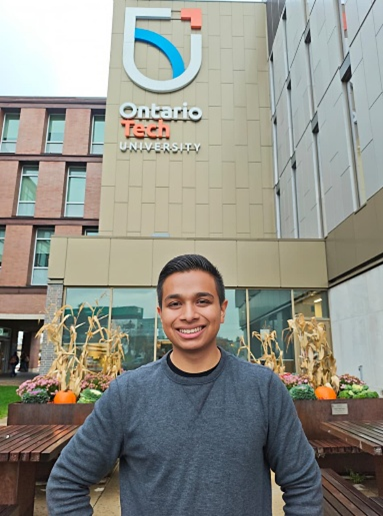
Master of Science
Marcos Gael Rodríguez Frías is a MASc candidate in Mechanical Engineering (Energy & Thermofluids) at Ontario Tech University, supervised by Dr. Horia Hangan.
His MASc thesis investigates the experimental pressure distribution of an airfoil under axisymmetric gusts and the alleviation of gust-induced loads.
Marcos completed his BSc in Aerospace Engineering at Universidad Nacional Autónoma de México. His work sits at the intersection of aerodynamics and structural response, using numerical methodologies alongside wind-tunnel experiments to investigate bluff-body flows, vortex-induced loading, and adaptive strategies for improved performance and resilience.
At Ontario Tech, he is also a Teaching Assistant for the Faculty of Science for undergraduate mathematics courses.
3. Kiran Purushothama Keshavan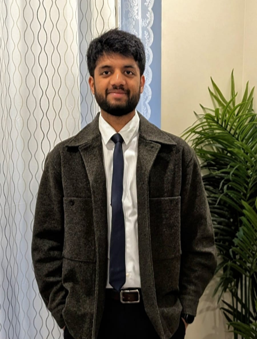
Master of Science
Kiran is a Mechanical Engineer with a strong passion for numerical methods and simulation. His interests lie in particulate flow dynamics, CFD-DEM coupled simulations, and using scripting to automate processes and enhance post-processing workflows.
Currently, he’s pursuing his master’s thesis, where he’s developing numerical techniques to analyze and predict snow adhesion on different surfaces. The goal is to better understand how snow accumulates under varying weather and environmental conditions, a critical aspect in improving design and safety in real-world applications.
He works at the intersection of physics and computation, modeling how snow actually adheres and piles up on real surfaces—from no-wind indoor snow tests to chaotic outdoor conditions. ANSYS Fluent does the heavy lifting; MATLAB runs sanity checks on his analytical model. He has developed a special fondness for particle-laden atmospheric boundary-layer (ABL) flows since being associated with the Weather On Wheels project. He loves writing code to add more customizability to his model… right up until the same bug survives the 30-minute mark. That’s his cue to step away, pour a coffee, cue the alt-indie playlist, and come back with a fresh mind - most days, that cracks it. When he’s not doing any of this, you’ll probably find him planning the next trek or watching a crime thriller.
1. Farimah Hosseinnouri:
Master of Science
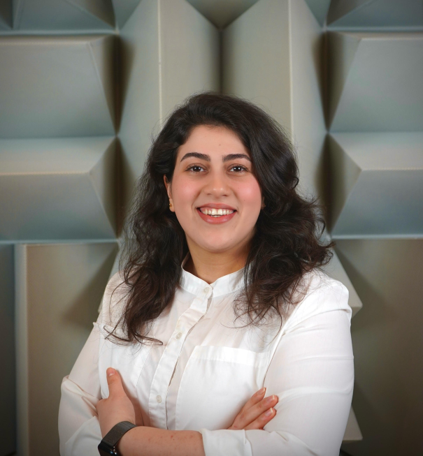 Farimah has a strong background in Wind Engineering. During her undergraduate studies, she focused on wind turbine performance and flow characterization. She pursued her M.Sc. at Ontario Tech University, where she actively contributed to the Weather on Wheels (WoW) project. Her research explored outdoor snow accumulation and the replication of these accretion processes under controlled conditions using artificial snow at the ACE Climatic Wind Tunnel. Farimah’s work involved designing and conducting experiments that accurately simulate real-world environments to advance our understanding of snow accretion phenomena and their impacts. After graduation, she began working as a Project Consultant at Cermak Peterka Petersen (CPP) Wind Engineering Consultants, where she provides industry-leading wind consulting services to architects, engineers, and developers around the world.
2. Ahmed Jafari
Master of Science
Ahmed is a motivated professional with practical experience in fluid simulations and experimental research focused on building physics in cold climates. He has collaborated closely with cross-functional teams, applying critical thinking to enhance experimental processes. With more than 4 years of experience in supply chain and production management for an assembly plant, overseeing over 1,000 raw materials and 50+ SKUs, He offers a deep understanding of complex operations and has consistently demonstrated strong communication skills to solve problems and manage projects efficiently. He pursued his M.Sc. at Ontario Tech University, where he actively contributed to the Weather in Box (WiB) project.
Wind Energy - 5005G
Syllabus Overview
Course Topics
-
Introduction to Wind Energy: Economic background
-
Wind Turbines Overview
-
Wind Characterization: Atmospheric Boundary Layer
-
Wind Characterization: Wind Statistics and Measurements
-
Wind Resource Assessment:
-
Canadian Wind Atlas
-
Mesoscale & Microscale Simulations
-
-
Wind Turbine Performance: Linear & Angular Momentum Theory
-
Wind Turbine Performance: Blade Element Momentum (BEM) Theory
-
Wind Turbine Mechanics: Loads & Gear Boxes
-
Wind Turbine Control: Sensors & Control Systems
-
Environmental Impacts of Wind Energy Systems
-
Wind Sustainability Concepts
Course Project
Design and test a wind turbine.
Advanced Fluid Mechanics-5120G
Syllabus Overview
Course Topics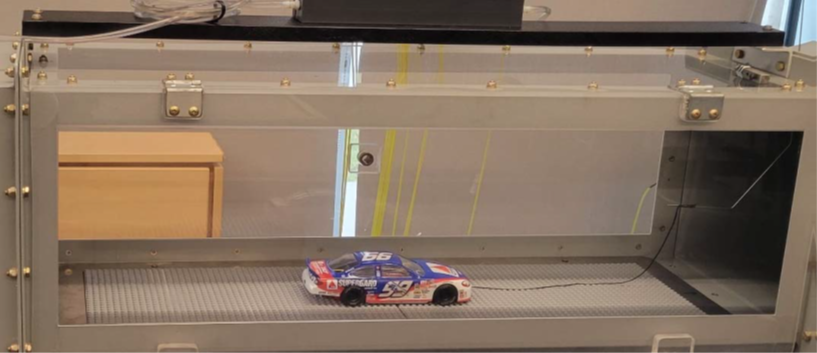
-
Introduction and Review of Basic Concepts
-
History
-
Fluid properties
-
Equations of motion
-
-
Mean Flow Field
-
Atmospheric Boundary Layer (ABL) mean flow
-
Exact solution flows
-
Similarity solution flows
-
-
Turbulent Flow Field (ABL)
-
Statistical description of turbulence
-
Probability Density Functions
-
Power spectrum
-
Correlations & length scales
-
Extreme value analysis
-
-
Bluff Body Aerodynamics
-
Ideal flow
-
Viscous flow
-
Separation & reattachment
-
Reynolds number effects
-
Wake flow
-
-
Experimental Techniques in Fluid Mechanics
-
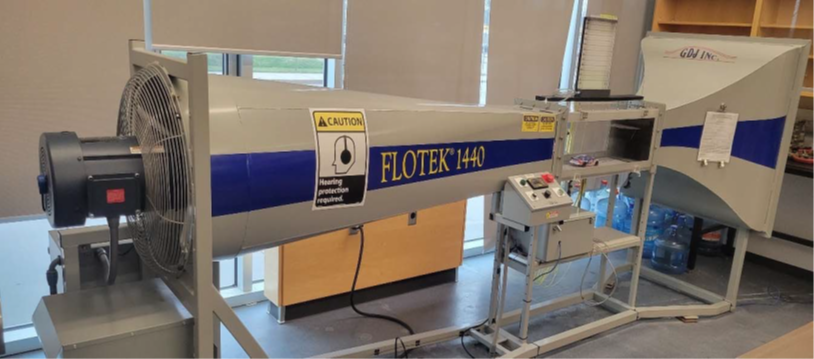
Wind tunnels
-
Point measurements
-
Planar & volumetric measurements
-
Full-scale measurement methods
-
Course Project
Experimental flow field measurements in a wind tunnel.
Publication:
[1] Carvalho, M., Moradi, S., Hosseinnouri, F., Keshavan, K., Villeneuve, E., Gultepe, I., ... & Hangan, H. (2024). Towards a model of snow accretion for autonomous vehicles. Atmosphere, 15(5), 548.
[2] Jafri, A., Villenuve, E., Agelin-Chaab, M., & Hangan, H. (2025). Experimental investigation of building mock-ups and air source heat pumps in cold climates. Energy and Built Environment.
[3] Hangan, H., Agelin-Chaab, M., Gultepe, I., Elfstrom, G., & Komar, J. (2022). Weather aerodynamic adaptation for autonomous vehicles: A tentative framework. Transactions of the Canadian Society for Mechanical Engineering, 47(1), 175-184.
[4] Carvalho, M., & Hangan, H. (2023). Modelling weather precipitation intensity on surfaces in motion with application to autonomous vehicles. Sensors, 23(19), 8034.
[5] Pao, W. Y., Carvalho, M., Hosseinnouri, F., Li, L., Rouaix, C., Agelin-Chaab, M., ... & Komar, J. (2024). Evaluating weather impact on vehicles: A systematic review of perceived precipitation dynamics and testing methodologies. Engineering Research Express, 6(1), 013001.