Undergraduate Labs
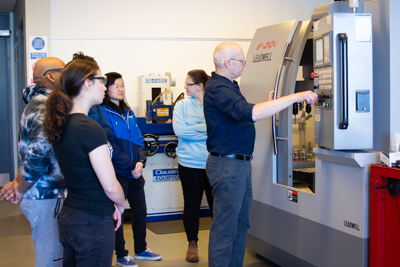
The laboratory is equipped with CNC Mill, T-6 CNC Lathe, abrasive waterjet cutter, laser cutters, and a thermoforming centre. Students get an all hands-on interaction with machines and tools. Experiments involving Metrology, CNC Plasma Cutting System, Surface Grinding, CNC Machining and G- code Programming are conducted and students acquire knowledge of engineering processes and tools through direct exposure to these machines and processes in the lab.
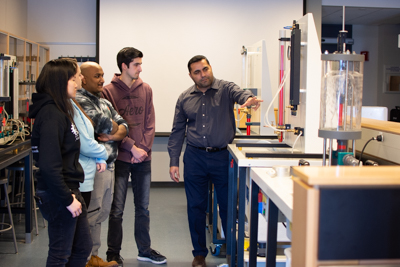
The laboratory is well equipped with equipment including and not limited to Basic heat pump demonstrator, Vapour pressure of water, Principle pelton Turbine, Basic Condensing unit, Commercial air conditioner board, Nozzle pressure distribution, Motor drive and display, Dynamometer assembly, Heat Pump, Steam Power Plant with Steam Engine and Rankine Cycler.
Lab sessions for Thermal Environment Engineering are conducted in this laboratory where students develop and conduct experiments related to HVAC systems. Lab sessions on Air Conditioning (Heating and Humidification Processes, Cooling and Dehumidification Processes), Heat Transmission and Heating Load, Cooling Load and Duct Design are conducted as well.
During the Combustion & Engines labs, students get well versed with Combustion fundamentals, Experiments involving Comparative Study of Heating Value for Diesel and Gasoline, Four-stroke gasoline engine, Two-stroke gasoline engine, Four-stroke diesel engine and Engine emissions are conducted. Students also get to use various engineering tools and softwares for the analysis in the group project and lab experiments.
Electric Machines and Communications Systems Lab
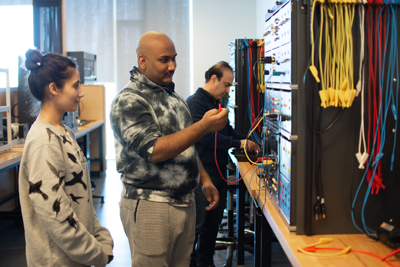
This laboratory provides hands-on and experiential learning opportunities for students and supports many engineering courses such as Communication Systems, Electric Machines and Power Systems.The laboratory is equipped with Lucus Nulle and Labvolt/FESTO interactive learning systems. This laboratory provides hands-on learning opportunities where students can experiment with a wide variety of equipment to learn about practical engineering aspects associated with real-world systems. The laboratory equipment consists of the following but not limited to:
- LN transformers, induction, synchronous, asynchronous, and DC machines.
- LN UniTrain experimental boards and instruments for communication systems testing e.g., Filters, Modulation techniques (AM and FM), Baseband Transmission and Digital Modulation
- Labvolt/FESTO interchangeable experimental hardware and test instruments for many electric machines and power systems e.g. Transformers, DC Machines, Three-Phases Asynchronous Machines, Synchronous Machines, Slip-ring Rotor Machines, Single phase AC-DC rectifier, DC-DC Step-down (buck) converter, DC-AC Single phase inverter, Three-phase DC-AC inverter and Resonant converters.
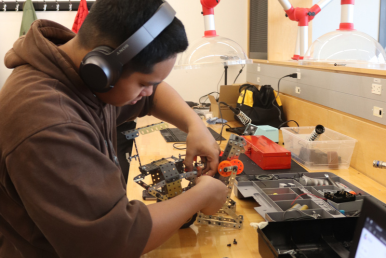
Jeffrey Boyce Engineering Innovation and Design Studio
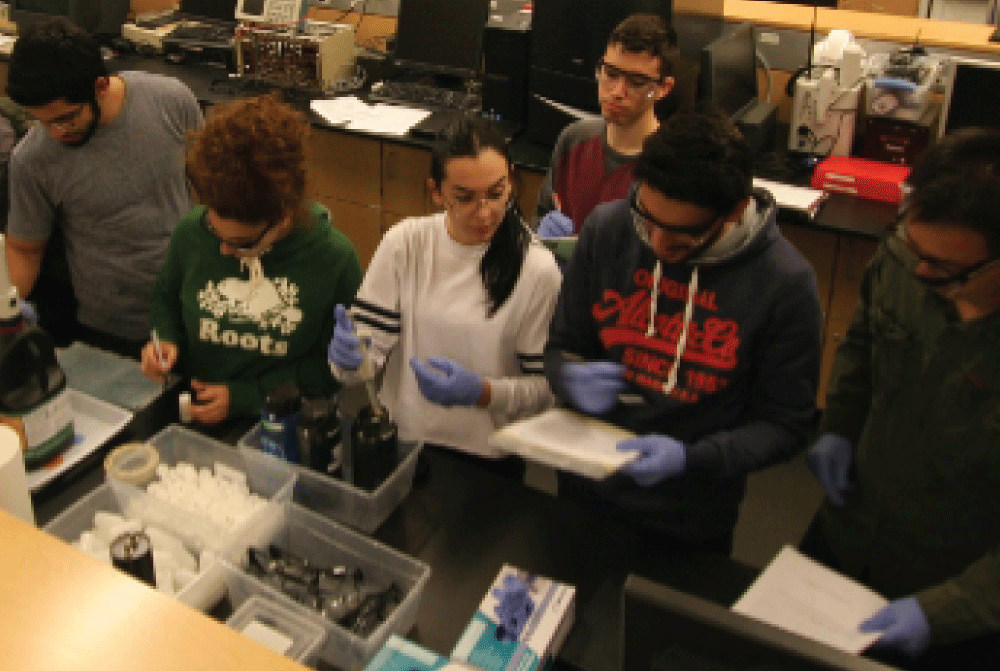
Environmental Radiation Protection and Measurement Teaching Lab
This laboratory has a wide array of hand-held, table top and floor-mounted radiation detection systems such as Giger-Muller, Sodium Iodide, High Purity Germanium, Liquid Scintillation, Radon monitors, X-ray fluorescence Spectroscopy and etc.
Students also use this lab to learn about thermo-luminescence dosimetry (TLD), environmental sample collection techniques, chain-of-custody and administration of emergency response teams during an emergency release of nuclear material into the environment.
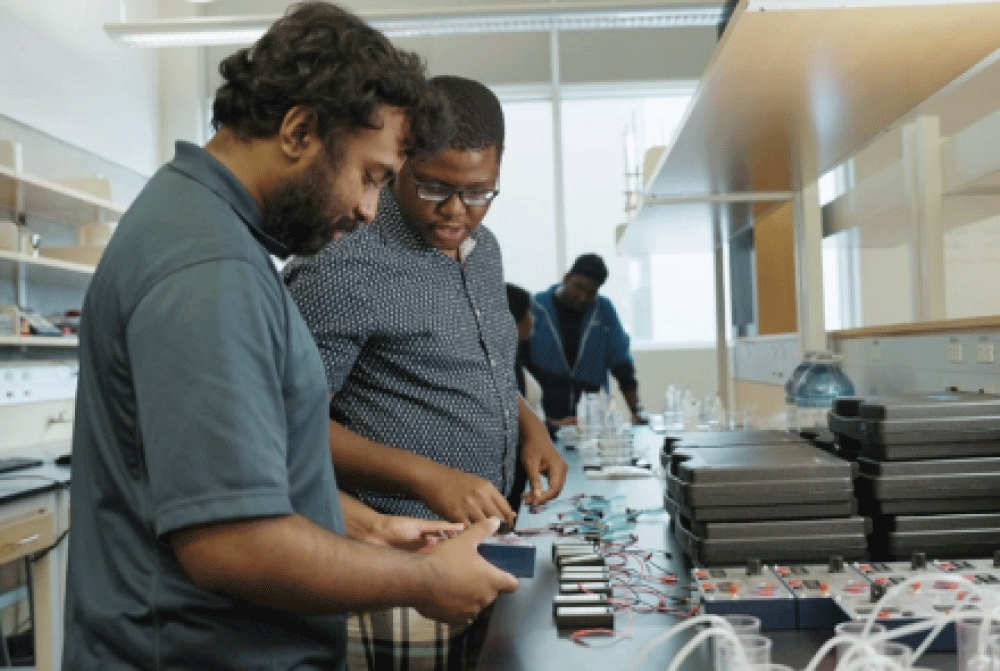
This lab facilitates physical routers and switches to cover the computer networking concepts, models, and technologies. Students will develop an understanding of the basic structure and operation of TCP/IP network models and how these models support communication between devices. It also supports for understanding the functions, protocols, and timing characteristics of common network devices such as hubs, bridges, switches, routers, and gateways. Students will examine the structure of various network protocols and investigate current and emerging networking technologies used in modern communication systems. Through practical activities, they will learn how to design and implement a small computer network using appropriate hardware and software tools. Emphasis is placed on collaborative teamwork to plan, build, and troubleshoot network systems.
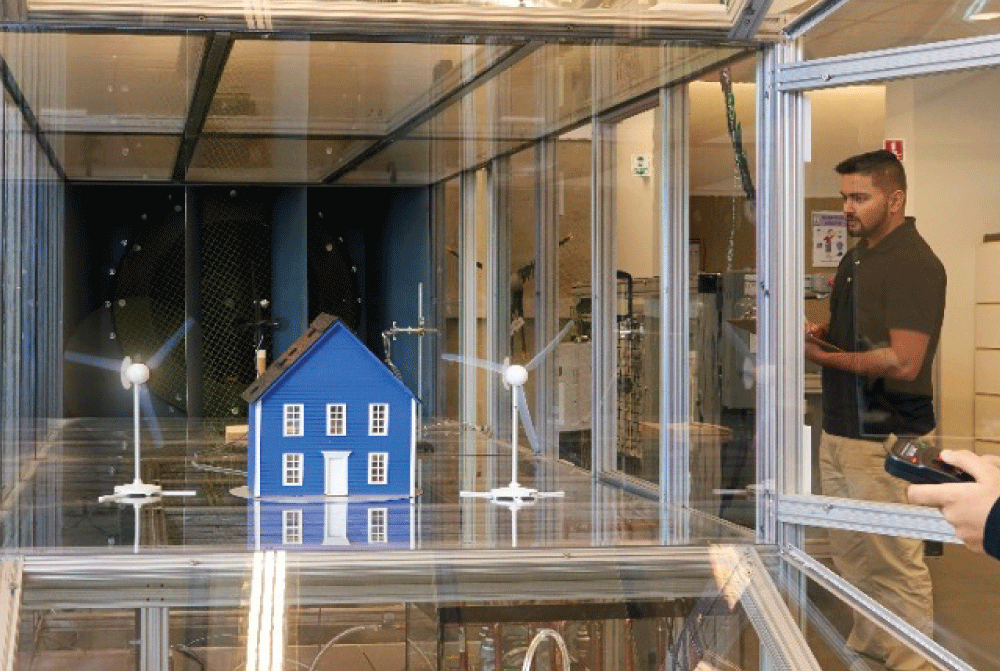
Laboratory sessions conducted in this facility provide students with practical exposure to the analysis and characterization of fluid flow under various conditions. Experiments on the center of pressure enable the determination of hydrostatic force distribution on submerged surfaces and validation of theoretical predictions. Flow measurement experiments introduce techniques such as volumetric and differential pressure based methods, allowing students to evaluate flow rates and associated uncertainties.
The Bernoulli's principle is experimentally verified through controlled setups, where students analyze the relationship between pressure, velocity, and elevation head along a streamline. The impact of jet apparatus is used to study momentum transfer and force exerted by fluid jets on different vane geometries reinforcing conservation of momentum concepts.
The wind chamber provides a controlled environment for examining aerodynamic characteristics, including flow visualization, velocity profiling, and basic drag/lift behavior on test models. Through these experiments students develop a strong understanding of fluid statics, kinematics, and dynamics, while gaining experience in data acquisition, dimensional analysis, and validation of empirical correlations.
The laboratory emphasizes the integration of theoretical knowledge with experimental practice preparing students for applications in aerodynamics, hydraulic systems, and fluid engineering design.
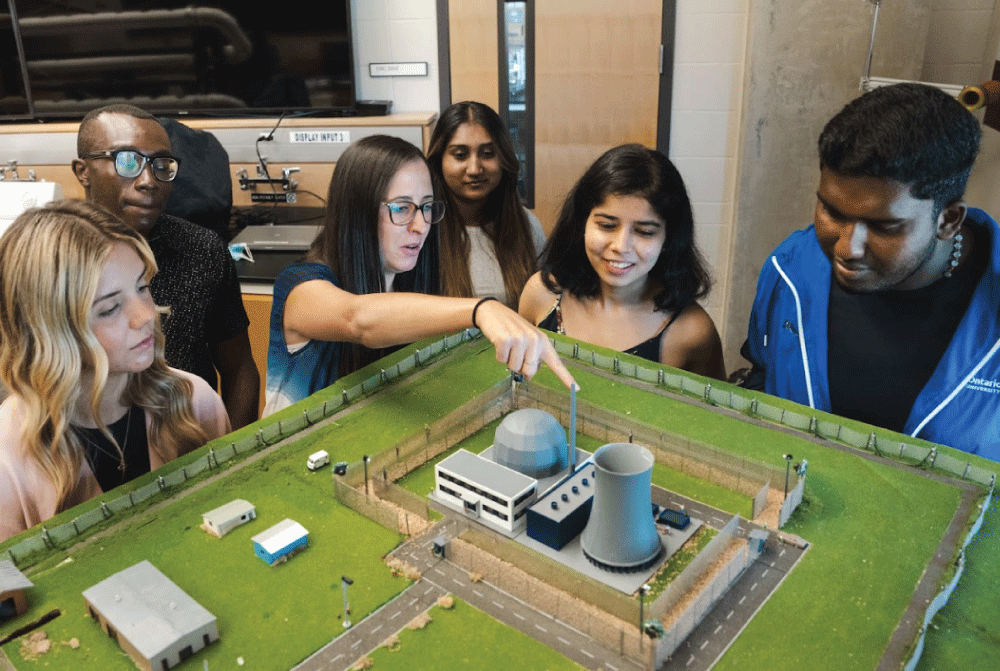
The laboratory encompasses the study of modern railway systems, including metro, tram, and mainline/commuter networks. Students examine system design requirements, regulatory frameworks, and key economic and operational parameters that influence railway infrastructure projects.
In parallel, the laboratory focuses extensively on solar energy technologies and thermal systems. Students explore solar radiation measurement and predictive modeling, along with detailed analysis of radiative heat transfer phenomena. The curriculum covers the classification and application of solar energy systems, including solar thermal technologies for heating, cooling, air conditioning, power generation, and freshwater production.
Core topics include the design and performance of solar collectors, spectral characteristics of absorbing materials, and advanced systems such as concentrated solar power (CSP) and photovoltaic technologies. The principles of energy conversion are reinforced through the study of solar cells, materials, and operational characteristics, as well as integrated solar energy systems for enhanced efficiency and multi-generation outputs. Through simulation-based and analytical methods, the laboratory equips students with the skills to model, evaluate, and optimize complex energy systems, preparing them for advanced applications in renewable energy engineering, sustainable transportation, and integrated energy system design.
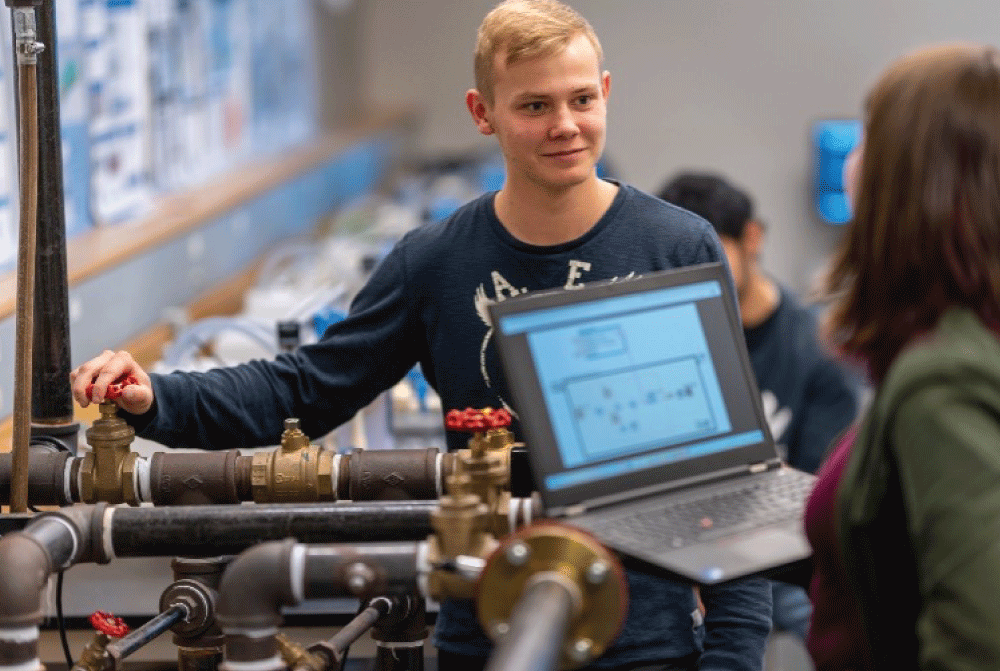
Mechanical Equipment and Systems Teaching Lab
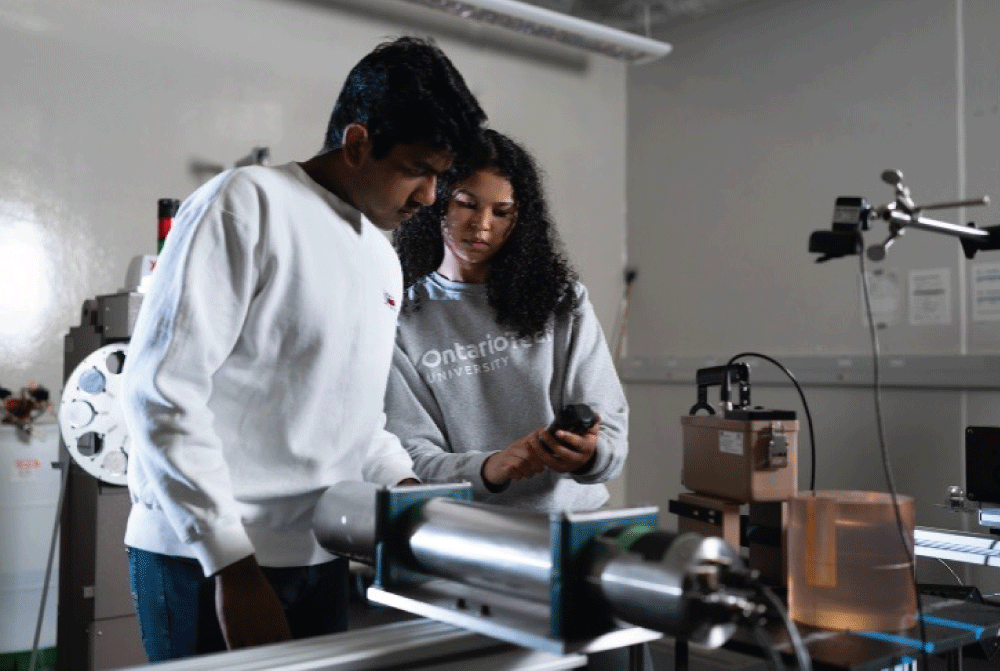
Our undergraduate students use this facility to conduct experiment to understand the principles of Radiation Shielding and Neutron Activation Analysis.
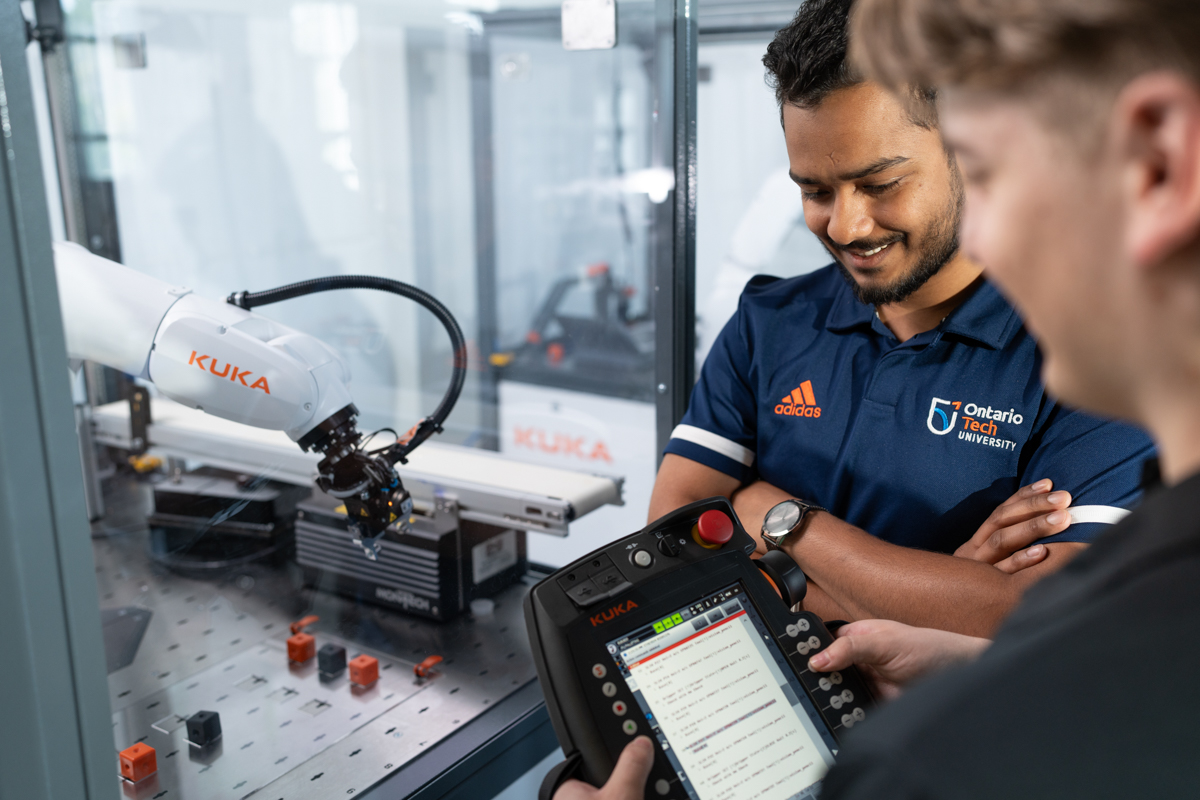
Mechatronics Design, Automation and Innovation Lab
Students learn how to design integrated mechatronic systems by applying principles of mechanical systems, electronics, sensors, actuators, and control. The focus of the laboratory is to provide the practical tools and methodologies required to successfully design and implement mechatronic systems. Students delas with the real-world challenges and considerations involved in the design and implementation of successful mechatronic solutions. Through collaborative and hands-on learning activities, students develop the practical engineering skills required for modern automation, robotics, and intelligent system applications.